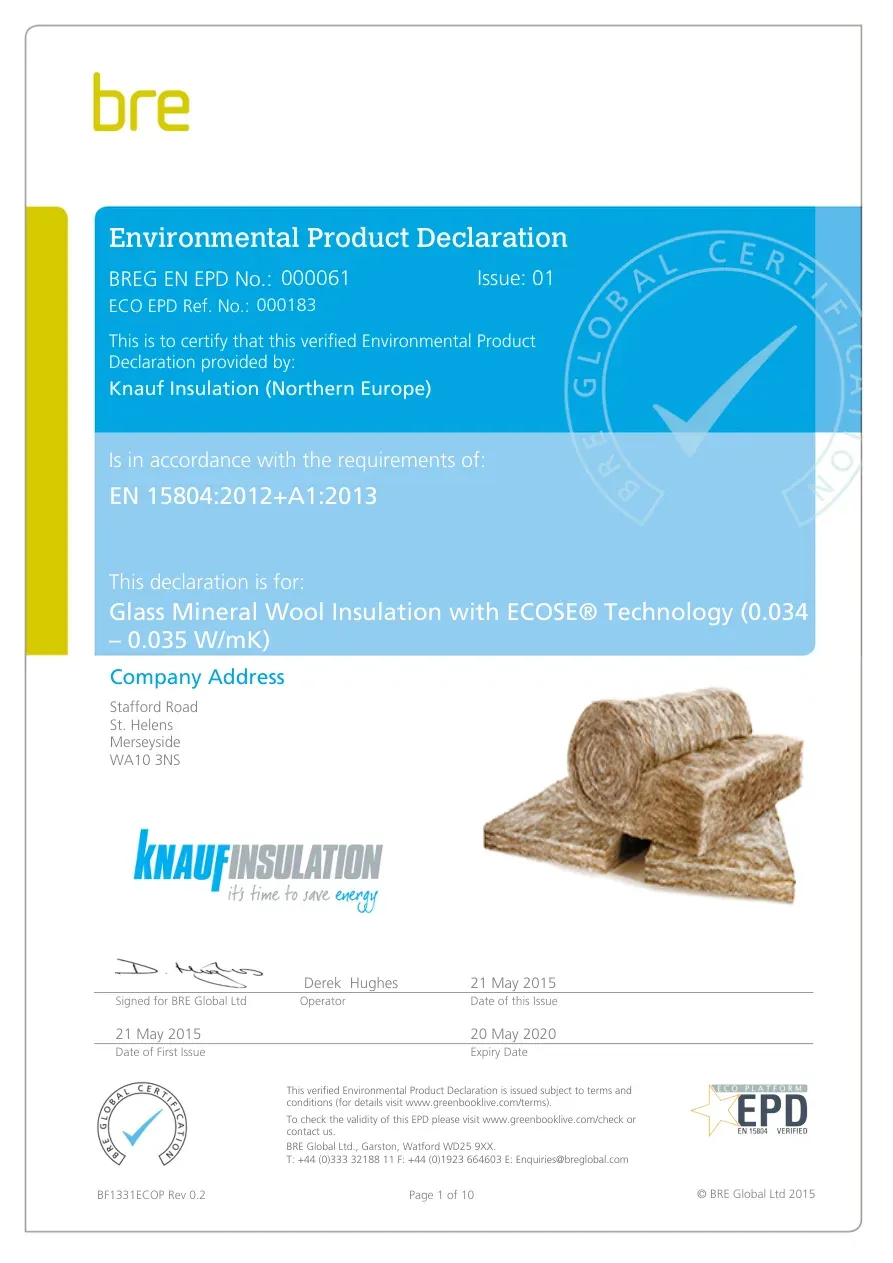
Company AddressDerek Hughes21 May 2015Signed for BRE Global Ltd OperatorDate of this Issue21 May 201520 May 2020Date of First IssueExpiry DateStafford RoadSt. HelensMerseysideWA10 3NSEnvironmental Product Declaration000061Issue: 01This is to certify that this verified Environmental Product Declaration provided by:Is in accordance with the requirements of:EN 15804:2012+A1:2013This declaration is for:Glass Mineral Wool Insulation with ECOSE® Technology (0.034 – 0.035 W/mK)Knauf Insulation (Northern Europe)BREG EN EPD No.:ECO EPD Ref. No.: 000183To check the validity of this EPD please visit www.greenbooklive.com/check or contact us.BRE Global Ltd., Garston, Watford WD25 9XX.T: +44 (0)333 32188 11 F: +44 (0)1923 664603 E: Enquiries@breglobal.comThis verified Environmental Product Declaration is issued subject to terms and conditions (for details visit www.greenbooklive.com/terms).BF1331ECOP Rev 0.2Page 1 of 10© BRE Global Ltd 2015
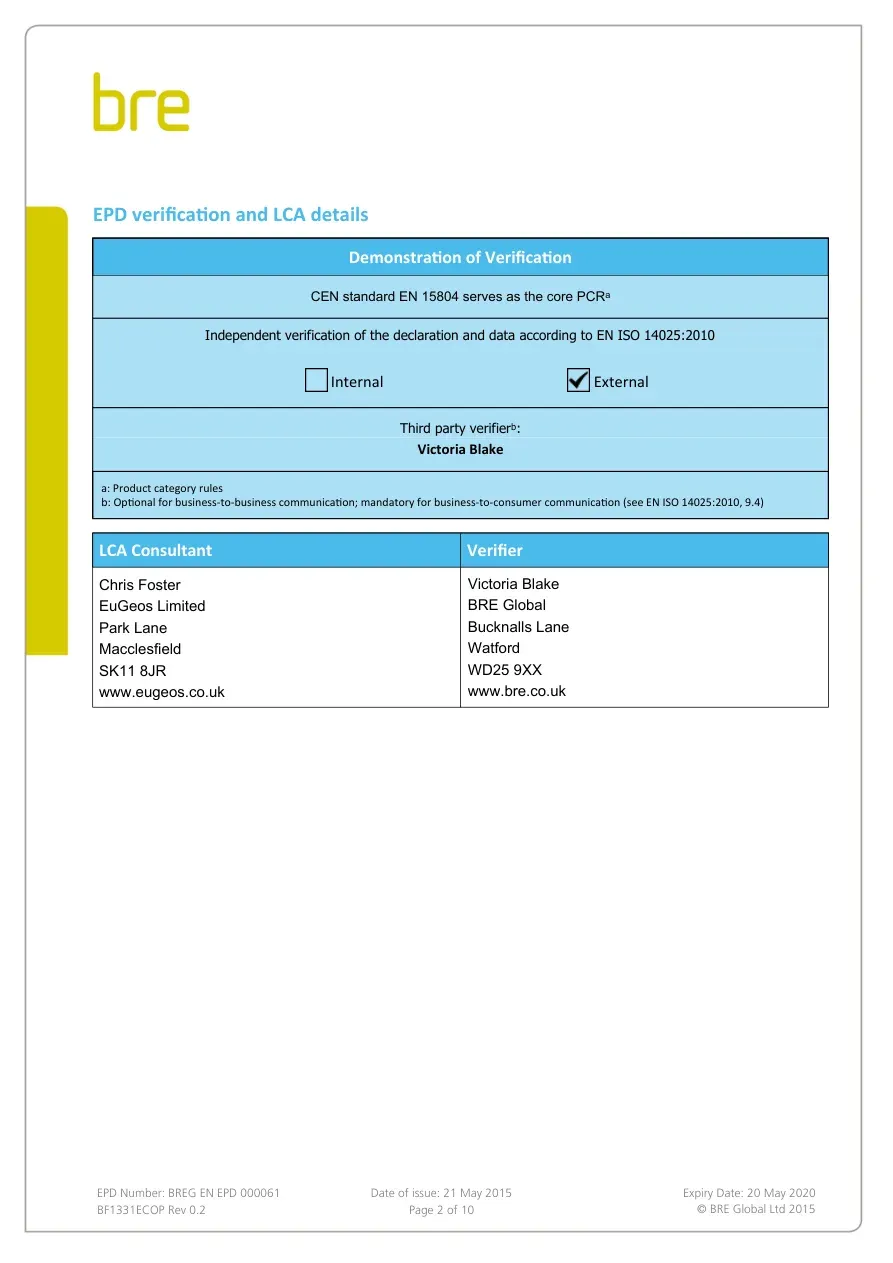
Demonstra�on of Veri�ca�onCEN standard EN 15804 serves as the core PCRᵃInternalIndependent verification of the declaration and data according to EN ISO 14025:2010ExternalThird party verifierᵇ:Victoria Blakea: Product category rulesb: Op�onal for business-to-business communica�on; mandatory for business-to-consumer communica�on (see EN ISO 14025:2010, 9.4)EPD veri�ca�on and LCA detailsLCA ConsultantVeri�erChris FosterEuGeos LimitedPark LaneMacclesfieldSK11 8JRwww.eugeos.co.ukVictoria BlakeBRE GlobalBucknalls LaneWatfordWD25 9XXwww.bre.co.ukEPD Number: BREG EN EPD 000061Date of issue: 21 May 2015Expiry Date: 20 May 2020BF1331ECOP Rev 0.2Page 2 of 10© BRE Global Ltd 2015
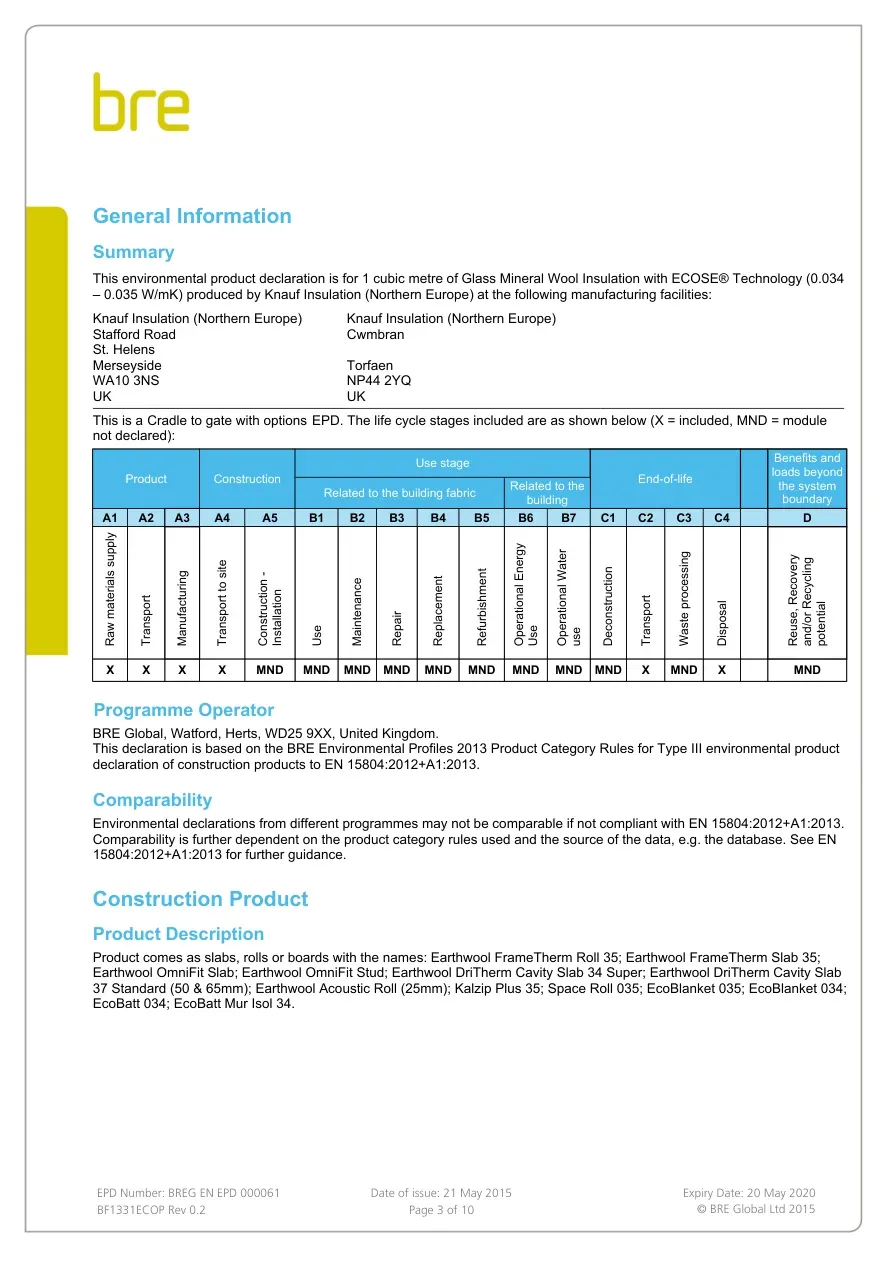
General InformationSummaryThis environmental product declaration is for 1 cubic metre of Glass Mineral Wool Insulation with ECOSE® Technology (0.034– 0.035 W/mK) produced by Knauf Insulation (Northern Europe) at the following manufacturing facilities: Knauf Insulation (Northern Europe)Stafford RoadSt. HelensMerseysideWA10 3NSUKKnauf Insulation (Northern Europe)CwmbranTorfaenNP44 2YQUKBRE Global, Watford, Herts, WD25 9XX, United Kingdom.This declaration is based on the BRE Environmental Profiles 2013 Product Category Rules for Type III environmental product declaration of construction products to EN 15804:2012+A1:2013.Programme Operator Comparability Environmental declarations from different programmes may not be comparable if not compliant with EN 15804:2012+A1:2013. Comparability is further dependent on the product category rules used and the source of the data, e.g. the database. See EN 15804:2012+A1:2013 for further guidance.This is a Cradle to gate with options EPD. The life cycle stages included are as shown below (X = included, MND = modulenot declared):ProductConstructionUse stageEnd-of-lifeBenefits and loads beyond the system boundaryRelated to the building fabricRelated to the building A1A2A3A4A5B1B2B3B4B5B6B7C1C2C3C4DRaw materials supplyTransportManufacturingTransport to siteConstruction - InstallationUseMaintenanceRepairReplacementRefurbishmentOperational Energy UseOperational Water useDeconstructionTransportWaste processingDisposalReuse, Recovery and/or Recycling potentialXXXXMNDMNDMNDMNDMNDMNDMNDMNDMNDXMNDXMNDConstruction ProductProduct DescriptionProduct comes as slabs, rolls or boards with the names: Earthwool FrameTherm Roll 35; Earthwool FrameTherm Slab 35; Earthwool OmniFit Slab; Earthwool OmniFit Stud; Earthwool DriTherm Cavity Slab 34 Super; Earthwool DriTherm Cavity Slab 37 Standard (50 & 65mm); Earthwool Acoustic Roll (25mm); Kalzip Plus 35; Space Roll 035; EcoBlanket 035; EcoBlanket 034; EcoBatt 034; EcoBatt Mur Isol 34.EPD Number: BREG EN EPD 000061Date of issue: 21 May 2015Expiry Date: 20 May 2020BF1331ECOP Rev 0.2Page 3 of 10© BRE Global Ltd 2015
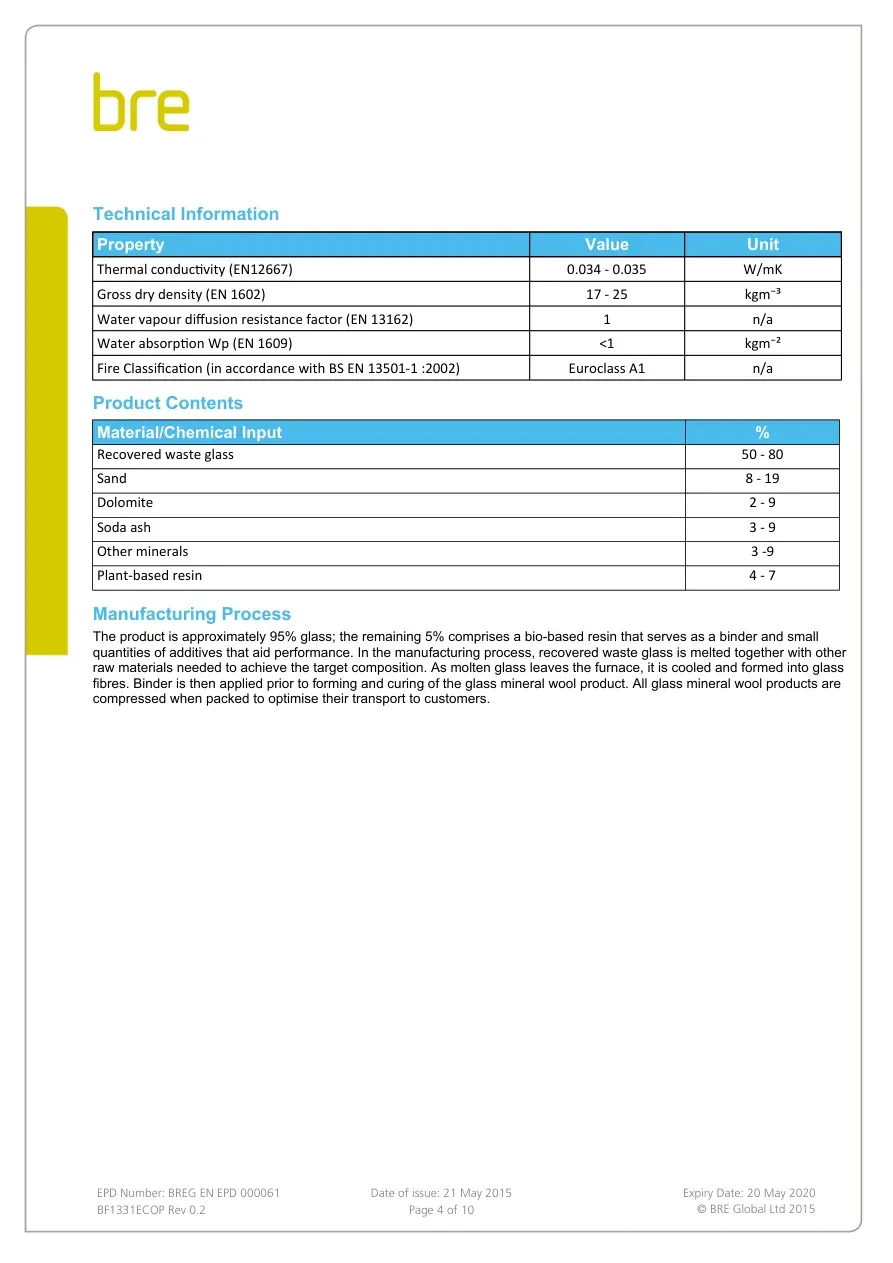
Manufacturing ProcessThe product is approximately 95% glass; the remaining 5% comprises a bio-based resin that serves as a binder and small quantities of additives that aid performance. In the manufacturing process, recovered waste glass is melted together with other raw materials needed to achieve the target composition. As molten glass leaves the furnace, it is cooled and formed into glass fibres. Binder is then applied prior to forming and curing of the glass mineral wool product. All glass mineral wool products are compressed when packed to optimise their transport to customers.Technical InformationPropertyValueUnitThermal conduc�vity (EN12667)0.034 - 0.035W/mKGross dry density (EN 1602)17 - 25kgm⁻³Water vapour di�usion resistance factor (EN 13162)1n/aWater absorp�on Wp (EN 1609)<1kgm⁻²Fire Classi�ca�on (in accordance with BS EN 13501-1 :2002)Euroclass A1n/aProduct ContentsMaterial/Chemical Input%Recovered waste glass50 - 80Sand8 - 19Dolomite2 - 9Soda ash3 - 9Other minerals3 -9Plant-based resin4 - 7EPD Number: BREG EN EPD 000061Date of issue: 21 May 2015Expiry Date: 20 May 2020BF1331ECOP Rev 0.2Page 4 of 10© BRE Global Ltd 2015
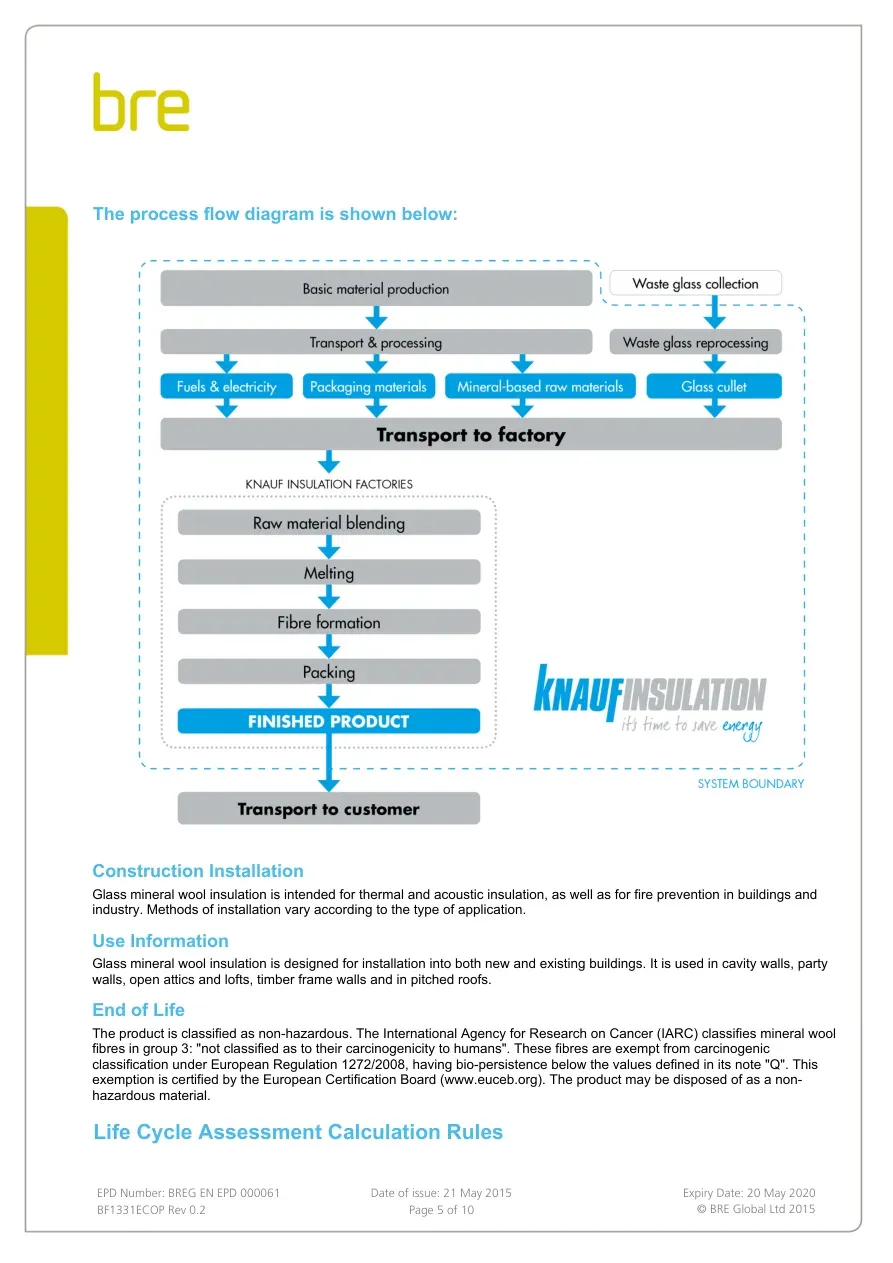
Construction Installation Glass mineral wool insulation is intended for thermal and acoustic insulation, as well as for fire prevention in buildings and industry. Methods of installation vary according to the type of application.Use Information Glass mineral wool insulation is designed for installation into both new and existing buildings. It is used in cavity walls, party walls, open attics and lofts, timber frame walls and in pitched roofs.The product is classified as non-hazardous. The International Agency for Research on Cancer (IARC) classifies mineral wool fibres in group 3: "not classified as to their carcinogenicity to humans". These fibres are exempt from carcinogenic classification under European Regulation 1272/2008, having bio-persistence below the values defined in its note "Q". This exemption is certified by the European Certification Board (www.euceb.org). The product may be disposed of as a non-hazardous material.End of LifeThe process flow diagram is shown below:Life Cycle Assessment Calculation RulesEPD Number: BREG EN EPD 000061Date of issue: 21 May 2015Expiry Date: 20 May 2020BF1331ECOP Rev 0.2Page 5 of 10© BRE Global Ltd 2015
Declared / Functional unit 1 m³ of glass mineral wool insulation with ECOSE® Technology with the product names provided in the Product Description. The density used for the calculation of the LCA is 21 kg/m³.Data sources, quality and allocation Specific foreground data derived from Knauf Insulation production information is used in the product-stage LCA for modules A1-A3. Generic data is used for all other upstream and downstream processes that are beyond the control of the manufacturer (i.e. raw material production, vehicle operation, end-of-life). Where possible all relevant background LCI datasets were taken from the ecoinvent database v3.1. Where the creation of specific background datasets was necessary, these were created using processes within the ecoinvent database v3.1 wherever possible.In accordance with the requirements of EN 15804, the most current available data was used to calculate the EPD. Manufacturer-specific data from Knauf Insulation covers a production period of 1 year (01/01/2012 to 31/12/2012).All allocation procedures in the background datasets are in accordance with EN 15804 and are based on the ISO 14044.Materials, energy flows and associated emissions are allocated to the product by physical property.Cut-off criteria All data related to raw material, packaging material and consumable items, with the associated transport to the manufacturing site; process energy and water use; direct production waste and emissions to air and water are included.System boundary The system boundary of the EPD is defined using the modular approach set out in EN 15804. This cradle-to-gate with options EPD includes the product stage (A1-A3); transport to the construction site (A4); transport to waste processing (C2); and disposal at end-of-life (C4).EPD Number: BREG EN EPD 000061Date of issue: 21 May 2015Expiry Date: 20 May 2020BF1331ECOP Rev 0.2Page 6 of 10© BRE Global Ltd 2015
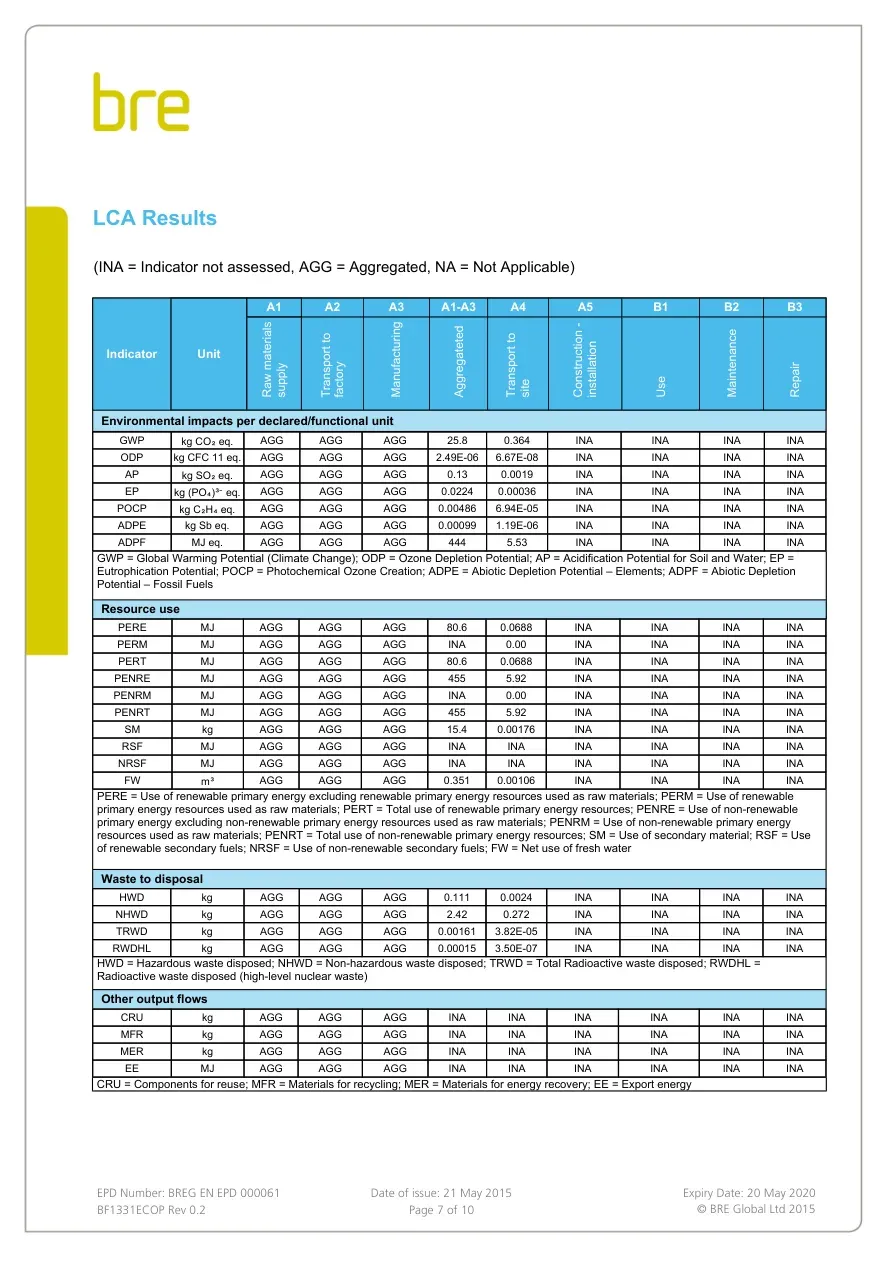
LCA Results(INA = Indicator not assessed, AGG = Aggregated, NA = Not Applicable)IndicatorUnitA1A2A3A1-A3A4A5B1B2B3Raw materials supplyTransport to factoryManufacturingAggregatetedTransport to siteConstruction - installationUseMaintenanceRepairEnvironmental impacts per declared/functional unitGWPkg CO₂ eq.AGGAGGAGG25.80.364INAINAINAINAODPkg CFC 11 eq.AGGAGGAGG2.49E-066.67E-08INAINAINAINAAPkg SO₂ eq.AGGAGGAGG0.130.0019INAINAINAINAEPkg (PO₄)³⁻ eq.AGGAGGAGG0.02240.00036INAINAINAINAPOCPkg C₂H₄ eq.AGGAGGAGG0.004866.94E-05INAINAINAINAADPEkg Sb eq.AGGAGGAGG0.000991.19E-06INAINAINAINAADPFMJ eq.AGGAGGAGG4445.53INAINAINAINAGWP = Global Warming Potential (Climate Change); ODP = Ozone Depletion Potential; AP = Acidification Potential for Soil and Water; EP = Eutrophication Potential; POCP = Photochemical Ozone Creation; ADPE = Abiotic Depletion Potential – Elements; ADPF = Abiotic Depletion Potential – Fossil FuelsResource useHWD = Hazardous waste disposed; NHWD = Non-hazardous waste disposed; TRWD = Total Radioactive waste disposed; RWDHL = Radioactive waste disposed (high-level nuclear waste)Other output flowsCRUkgAGGAGGAGGINAINAINAINAINAINAMFRkgAGGAGGAGGINAINAINAINAINAINAMERkgAGGAGGAGGINAINAINAINAINAINAEEMJAGGAGGAGGINAINAINAINAINAINAPEREMJAGGAGGAGG80.60.0688INAINAINAINAPERMMJAGGAGGAGGINA0.00INAINAINAINAPERTMJAGGAGGAGG80.60.0688INAINAINAINAPENREMJAGGAGGAGG4555.92INAINAINAINAPENRMMJAGGAGGAGGINA0.00INAINAINAINAPENRTMJAGGAGGAGG4555.92INAINAINAINASMkgAGGAGGAGG15.40.00176INAINAINAINARSFMJAGGAGGAGGINAINAINAINAINAINANRSFMJAGGAGGAGGINAINAINAINAINAINAFWm³AGGAGGAGG0.3510.00106INAINAINAINAPERE = Use of renewable primary energy excluding renewable primary energy resources used as raw materials; PERM = Use of renewable primary energy resources used as raw materials; PERT = Total use of renewable primary energy resources; PENRE = Use of non-renewable primary energy excluding non-renewable primary energy resources used as raw materials; PENRM = Use of non-renewable primary energy resources used as raw materials; PENRT = Total use of non-renewable primary energy resources; SM = Use of secondary material; RSF = Use of renewable secondary fuels; NRSF = Use of non-renewable secondary fuels; FW = Net use of fresh waterWaste to disposalHWDkgAGGAGGAGG0.1110.0024INAINAINAINANHWDkgAGGAGGAGG2.420.272INAINAINAINATRWDkgAGGAGGAGG0.001613.82E-05INAINAINAINARWDHLkgAGGAGGAGG0.000153.50E-07INAINAINAINACRU = Components for reuse; MFR = Materials for recycling; MER = Materials for energy recovery; EE = Export energyEPD Number: BREG EN EPD 000061Date of issue: 21 May 2015Expiry Date: 20 May 2020BF1331ECOP Rev 0.2Page 7 of 10© BRE Global Ltd 2015
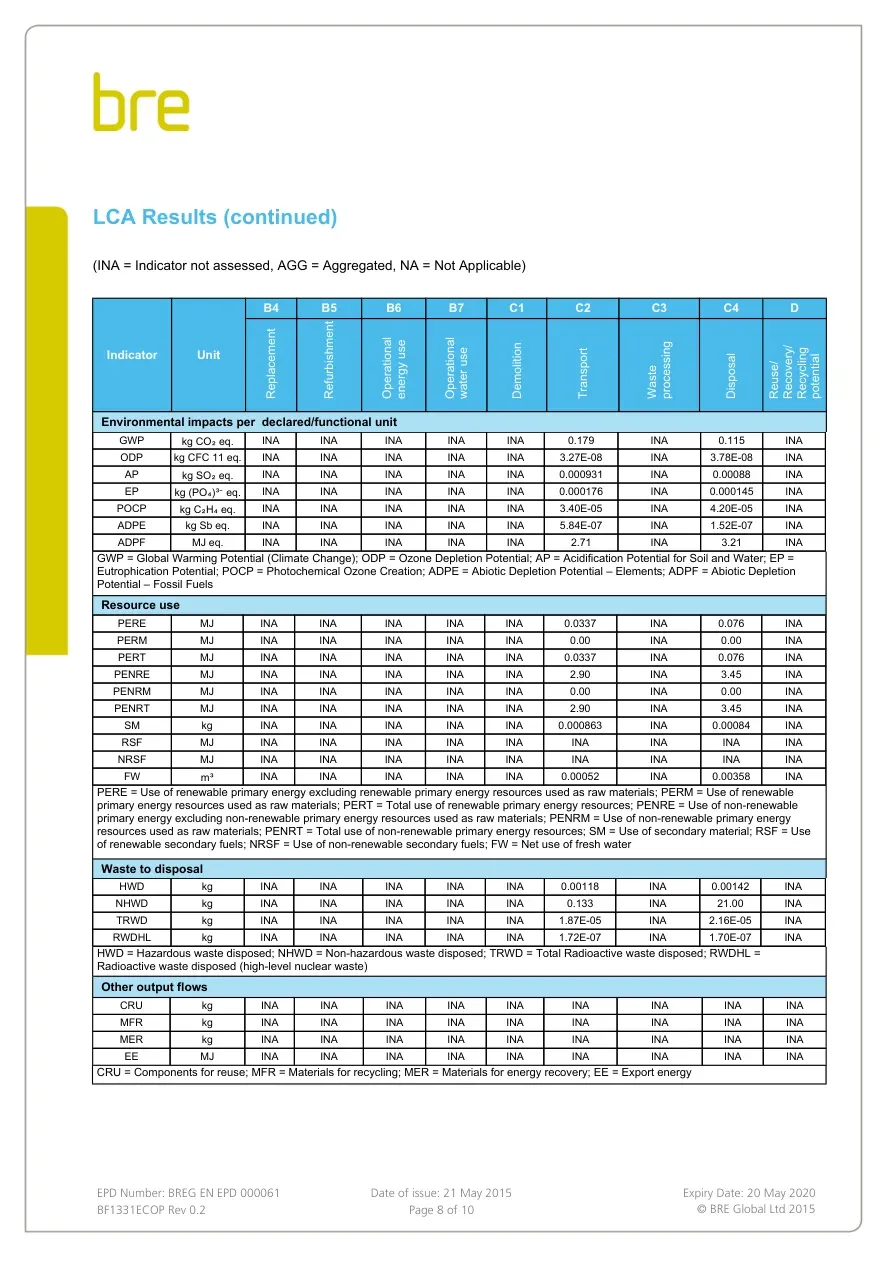
HWDkgINAINAINAINAINA0.00118INA0.00142INANHWDkgINAINAINAINAINA0.133INA21.00INATRWDkgINAINAINAINAINA1.87E-05INA2.16E-05INARWDHLkgINAINAINAINAINA1.72E-07INA1.70E-07INAGWP = Global Warming Potential (Climate Change); ODP = Ozone Depletion Potential; AP = Acidification Potential for Soil and Water; EP = Eutrophication Potential; POCP = Photochemical Ozone Creation; ADPE = Abiotic Depletion Potential – Elements; ADPF = Abiotic Depletion Potential – Fossil FuelsResource useGWPkg CO₂ eq.INAINAINAINAINA0.179INA0.115INAODPkg CFC 11 eq.INAINAINAINAINA3.27E-08INA3.78E-08INAAPkg SO₂ eq.INAINAINAINAINA0.000931INA0.00088INAEPkg (PO₄)³⁻ eq.INAINAINAINAINA0.000176INA0.000145INAPOCPkg C₂H₄ eq.INAINAINAINAINA3.40E-05INA4.20E-05INAADPEkg Sb eq.INAINAINAINAINA5.84E-07INA1.52E-07INAADPFMJ eq.INAINAINAINAINA2.71INA3.21INAIndicatorUnitB4B5B6B7C1C2C3C4DReplacementRefurbishmentOperational energy useOperational water useDemolitionTransportWaste processingDisposalReuse/ Recovery/ Recycling potentialEnvironmental impacts per declared/functional unit(INA = Indicator not assessed, AGG = Aggregated, NA = Not Applicable)LCA Results (continued)PEREMJINAINAINAINAINA0.0337INA0.076INAPERMMJINAINAINAINAINA0.00INA0.00INAPERTMJINAINAINAINAINA0.0337INA0.076INAPENREMJINAINAINAINAINA2.90INA3.45INAPENRMMJINAINAINAINAINA0.00INA0.00INAPENRTMJINAINAINAINAINA2.90INA3.45INASMkgINAINAINAINAINA0.000863INA0.00084INARSFMJINAINAINAINAINAINAINAINAINANRSFMJINAINAINAINAINAINAINAINAINAFWm³INAINAINAINAINA0.00052INA0.00358INAPERE = Use of renewable primary energy excluding renewable primary energy resources used as raw materials; PERM = Use of renewable primary energy resources used as raw materials; PERT = Total use of renewable primary energy resources; PENRE = Use of non-renewable primary energy excluding non-renewable primary energy resources used as raw materials; PENRM = Use of non-renewable primary energy resources used as raw materials; PENRT = Total use of non-renewable primary energy resources; SM = Use of secondary material; RSF = Use of renewable secondary fuels; NRSF = Use of non-renewable secondary fuels; FW = Net use of fresh waterWaste to disposalHWD = Hazardous waste disposed; NHWD = Non-hazardous waste disposed; TRWD = Total Radioactive waste disposed; RWDHL = Radioactive waste disposed (high-level nuclear waste)Other output flowsCRUkgINAINAINAINAINAINAINAINAINAMFRkgINAINAINAINAINAINAINAINAINAMERkgINAINAINAINAINAINAINAINAINAEEMJINAINAINAINAINAINAINAINAINACRU = Components for reuse; MFR = Materials for recycling; MER = Materials for energy recovery; EE = Export energyEPD Number: BREG EN EPD 000061Date of issue: 21 May 2015Expiry Date: 20 May 2020BF1331ECOP Rev 0.2Page 8 of 10© BRE Global Ltd 2015
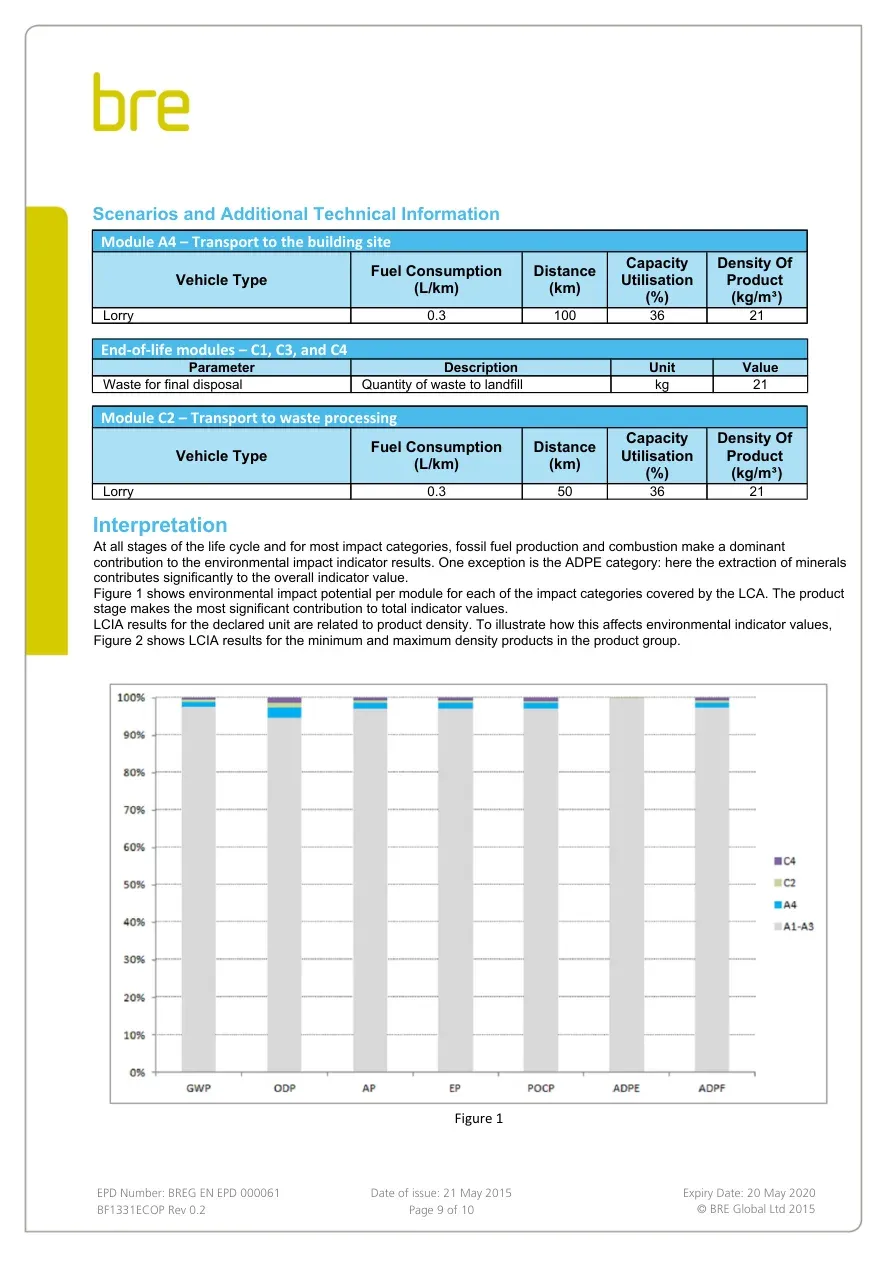
InterpretationAt all stages of the life cycle and for most impact categories, fossil fuel production and combustion make a dominant contribution to the environmental impact indicator results. One exception is the ADPE category: here the extraction of minerals contributes significantly to the overall indicator value.Figure 1 shows environmental impact potential per module for each of the impact categories covered by the LCA. The product stage makes the most significant contribution to total indicator values.LCIA results for the declared unit are related to product density. To illustrate how this affects environmental indicator values, Figure 2 shows LCIA results for the minimum and maximum density products in the product group.Scenarios and Additional Technical InformationEnd-of-life modules – C1, C3, and C4ParameterDescriptionUnitValueWaste for final disposalQuantity of waste to landfillkg21Module A4 – Transport to the building siteVehicle TypeFuel Consumption (L/km)Distance (km)Capacity Utilisation(%)Density OfProduct(kg/m³)Lorry0.31003621Module C2 – Transport to waste processingVehicle TypeFuel Consumption (L/km)Distance (km)Capacity Utilisation(%)Density OfProduct(kg/m³)Lorry0.3503621Figure 1EPD Number: BREG EN EPD 000061Date of issue: 21 May 2015Expiry Date: 20 May 2020BF1331ECOP Rev 0.2Page 9 of 10© BRE Global Ltd 2015
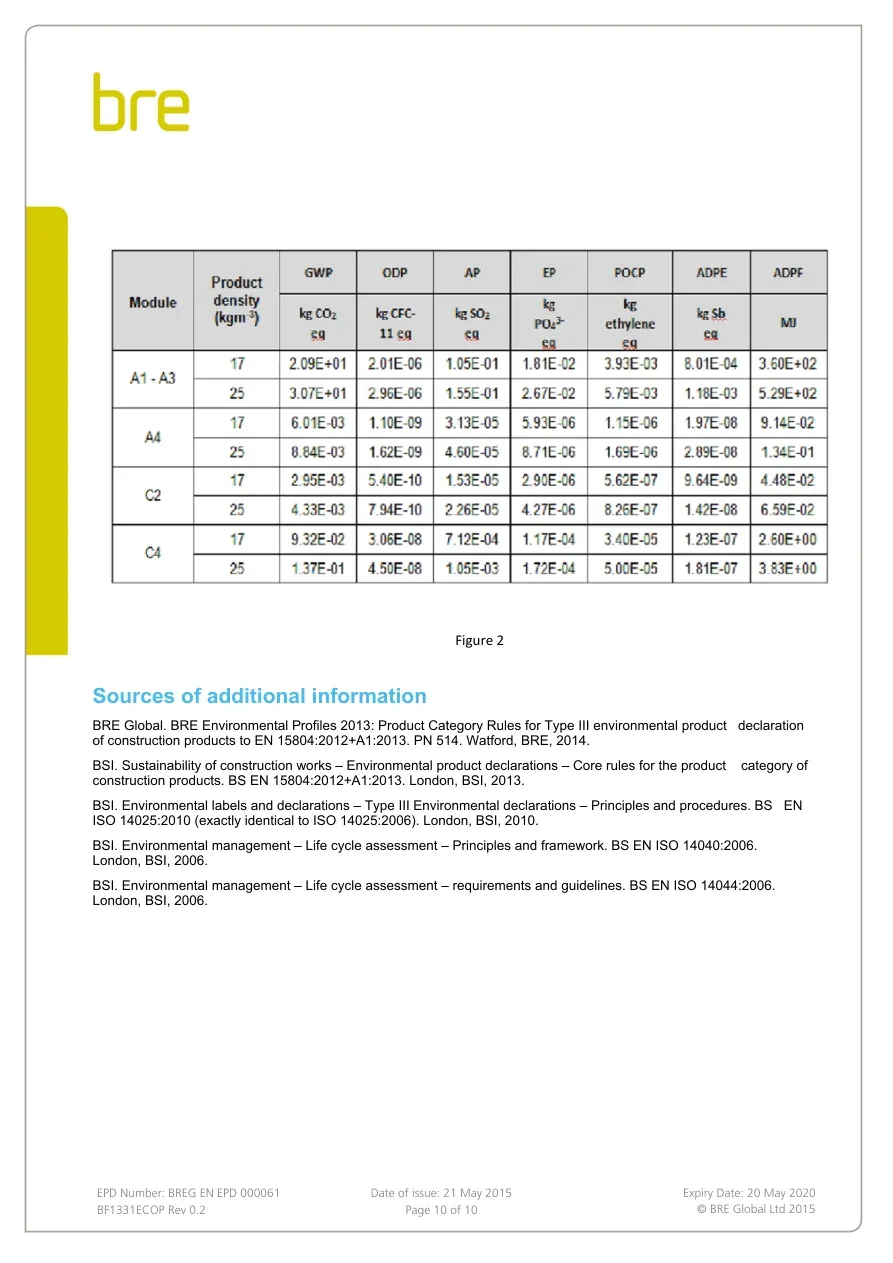
Figure 2Sources of additional informationBRE Global. BRE Environmental Profiles 2013: Product Category Rules for Type III environmental product declaration of construction products to EN 15804:2012+A1:2013. PN 514. Watford, BRE, 2014.BSI. Sustainability of construction works – Environmental product declarations – Core rules for the product category of construction products. BS EN 15804:2012+A1:2013. London, BSI, 2013.BSI. Environmental labels and declarations – Type III Environmental declarations – Principles and procedures. BS EN ISO 14025:2010 (exactly identical to ISO 14025:2006). London, BSI, 2010.BSI. Environmental management – Life cycle assessment – Principles and framework. BS EN ISO 14040:2006. London, BSI, 2006.BSI. Environmental management – Life cycle assessment – requirements and guidelines. BS EN ISO 14044:2006. London, BSI, 2006.EPD Number: BREG EN EPD 000061Date of issue: 21 May 2015Expiry Date: 20 May 2020BF1331ECOP Rev 0.2Page 10 of 10© BRE Global Ltd 2015
